Baby Growth and Development: A Complete and Reassuring Guide for Parents
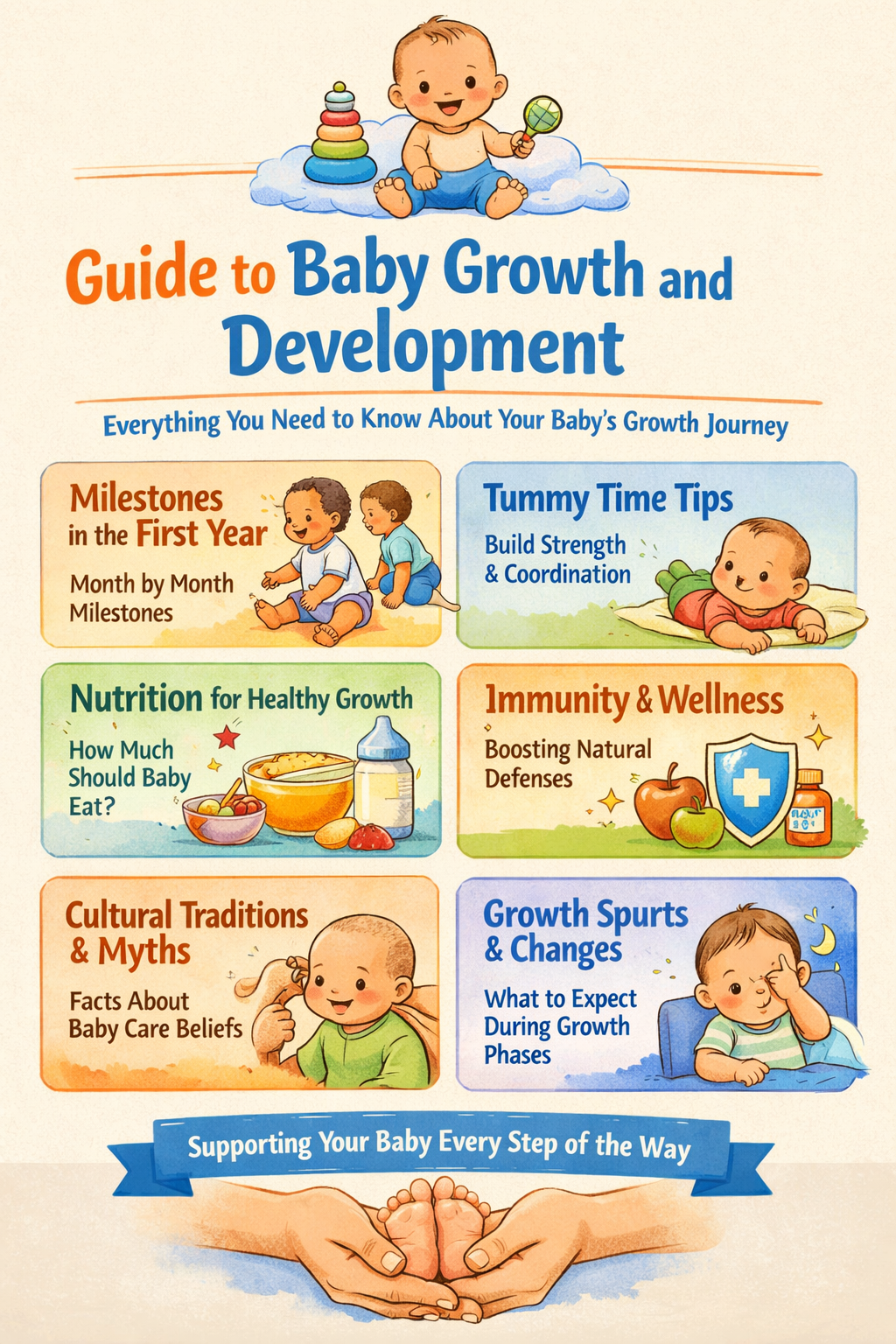
Baby growth and development is one of the first and most persistent concerns parents have after welcoming a baby into their lives. From the very first days, parents notice every small change in weight, movement, feeding habits, sleep patterns, and behavior. Questions often arise about whether a baby is growing enough, developing on time, or doing what other babies seem to be doing.
Growth affects the body, while development shapes how a baby moves, learns, communicates, and forms emotional connections. Although advice is everywhere, the truth is both simpler and more comforting. Babies grow and develop at their own pace. There is a wide range of what is normal, and variation does not mean something is wrong.
This guide is designed to gently walk you through baby growth and development from birth through the early years. You will learn what growth and development truly mean, how they unfold over time, how everyday care supports healthy progress, and when concerns are worth discussing with a pediatrician.
Understanding Baby Growth and Development
Baby growth and development are closely linked but represent different processes.
Growth refers to physical changes that can be measured. These include:
- Weight gain
- Increase in length or height
- Growth of head circumference
Development refers to functional and behavioral changes such as:
- Movement and coordination
- Brain development and learning
- Emotional responses and social interaction
- Communication and language skills
Growth can be tracked on charts, while development is observed through milestones and behavior. Both are important, but neither follows a perfectly predictable pattern.
Babies often grow in spurts rather than gradually. Development also occurs in bursts. A baby may suddenly gain weight, then remain the same for a while. Another baby may suddenly learn several new skills in one week and then appear to pause.
These patterns are normal. Development is not linear, and it does not follow a single path for all babies.
Baby Growth and Development From Birth
From birth, babies begin adapting to life outside the womb. Their bodies and brains are learning how to regulate temperature, feeding, digestion, sleep, and sensory input.
In the early weeks:
- Weight loss after birth is normal and expected
- Most babies regain birth weight within the first two weeks
- Feeding patterns are frequent and irregular
- Movement is mostly reflexive
Parents often feel pressure during this stage, especially when growth is discussed in numbers. It is important to remember that early growth is influenced by many factors including birth weight, feeding method, and genetics.
Healthy growth is best understood over time, not from a single measurement.
Baby Growth and Development in the First Year
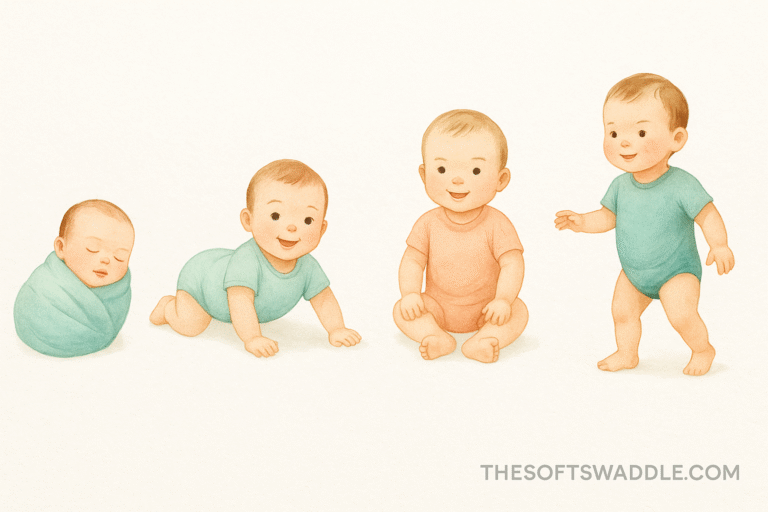
The first year of life is the most rapid period of growth and development after birth. Babies change dramatically in size, ability, and awareness.
During the first year, most babies:
- Double their birth weight by around five months
- Triple their birth weight by their first birthday
- Gain strength and control over their body
- Begin interacting more intentionally with caregivers
Development during this period includes head control, rolling, sitting, crawling, standing, early communication, and emotional bonding.
While charts and milestone lists can be helpful, they should be used as reference points rather than strict expectations. A baby may focus on physical growth first and communication later, or vice versa.
For a detailed month by month view of how growth and development typically progress, milestone guides can provide helpful context without pressure.
Physical Development and Movement
Movement is a foundation of baby growth and development. As babies move, they strengthen muscles, improve coordination, and build neural connections in the brain.
Movement supports:
- Muscle strength
- Balance and posture
- Sensory awareness
- Cognitive development
Babies are not born knowing how to move their bodies intentionally. Each movement skill builds on the previous one.
Rolling Over and Early Physical Skills
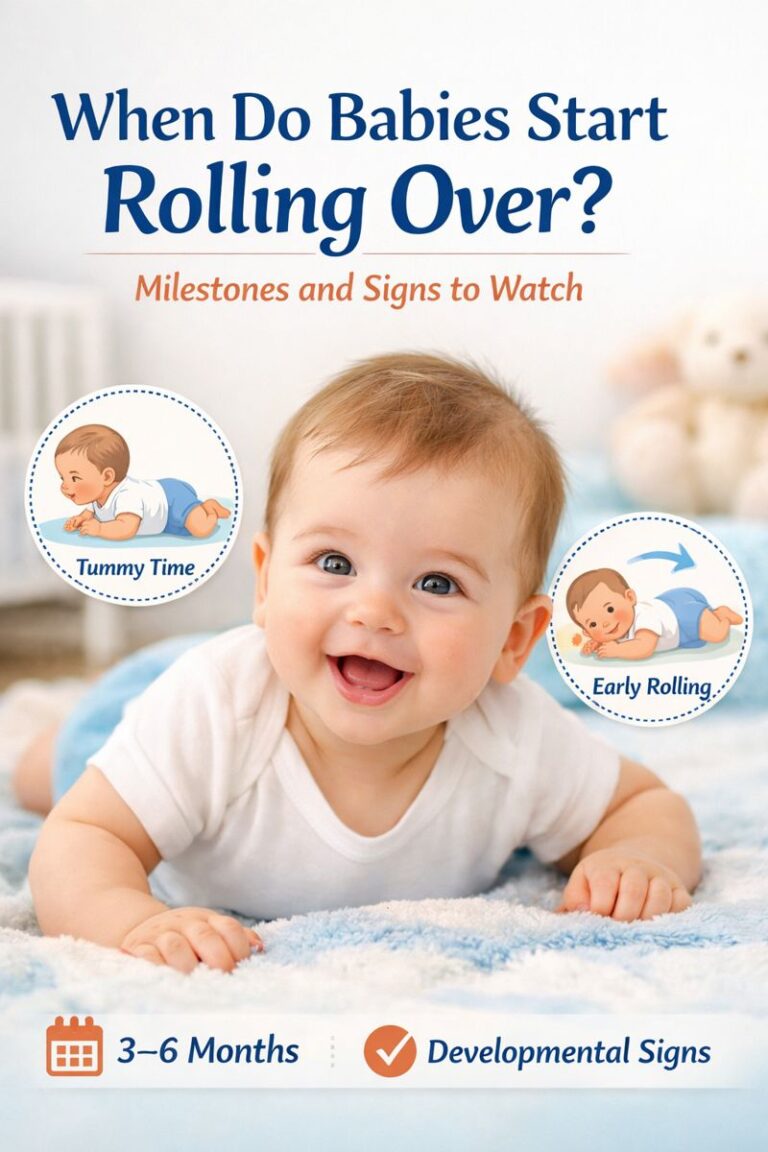
Rolling over is often one of the first major physical milestones parents notice. It usually appears after babies develop enough neck and core strength.
Some babies roll from tummy to back first, while others roll from back to tummy. Timing varies widely. Many parents begin to wonder when babies start rolling over and whether their baby’s movement is developing as expected. Some babies roll early, while others focus on other skills before mastering rolling.
Rolling is important because it:
- Strengthens the core
- Improves coordination
- Helps babies understand spatial movement
- Prepares them for sitting and crawling
A delay in rolling does not automatically indicate a problem. Babies develop skills in different orders, and some may skip certain movements entirely.
Tummy Time and Baby Growth and Development
Tummy time is one of the most powerful and accessible ways to support physical development. Supervised tummy time helps babies build the muscles they need for movement.
Tummy time supports:
- Neck and shoulder strength
- Arm and hand coordination
- Core stability
- Motor planning
It also supports brain development by encouraging sensory input and exploration.
Some babies resist tummy time at first. This is common and does not mean tummy time is harmful. Short sessions spread throughout the day are often more effective than long sessions.
Holding a baby chest to chest, placing them on a caregiver’s lap, or getting down on the floor at eye level can make tummy time feel more comforting and engaging.
Milestones and Individual Developmental Timelines
Milestones describe skills that most babies develop within a broad age range. Milestone charts are useful for tracking patterns but should never be treated as deadlines.
A baby may:
- Sit independently before crawling
- Crawl for a long time before walking
- Speak early but move later
- Move early but speak later
All of these patterns can be normal.
Comparing babies often creates unnecessary stress. Development depends on genetics, environment, temperament, and opportunity for movement and interaction.
A baby who develops at a slower pace in one area may be advanced in another. What matters most is consistent progress over time.
Cognitive Development and Learning
Cognitive development refers to how babies think, learn, and understand the world.
In the early months, cognitive development includes:
- Recognizing caregivers
- Responding to voices
- Tracking movement with the eyes
- Exploring objects with hands and mouth
As babies grow, cognitive development expands to:
- Understanding cause and effect
- Anticipating routines
- Solving simple problems
- Imitating actions
Everyday interaction supports cognitive growth. Talking, singing, reading, and responding to a baby’s cues help build neural connections that support learning.
Babies do not need structured lessons. They learn best through responsive interaction and play.
Emotional and Social Development
Emotional development is a crucial part of baby growth and development. It shapes how babies feel safe, express needs, and form relationships.
Babies develop emotional security when caregivers:
- Respond consistently to cries
- Offer physical closeness
- Maintain predictable routines
- Provide a calm presence
Secure attachment does not make babies dependent. It helps them feel safe enough to explore and learn.
Social development includes smiling, eye contact, vocalizing, and later interacting with others. These skills develop naturally when babies feel emotionally supported.
Nutrition and Baby Growth and Development
Nutrition fuels every aspect of growth and development. Babies require adequate calories and nutrients to build tissues, develop the brain, and support immune function.
Whether breastfed, formula fed, or combination fed, babies can grow and develop well when feeding needs are met.
Nutrition supports:
- Healthy weight gain
- Brain development
- Muscle and bone growth
- Immune system maturation
Feeding patterns often change during growth spurts and developmental phases. Babies may eat more frequently or seem hungrier for several days or weeks.
Parents often worry about how much their baby should eat to support healthy growth and development, especially during the first year when feeding patterns change frequently.
Understanding feeding cues and growth patterns can help parents feel more confident and less anxious.
Growth Spurts and Developmental Leaps
Growth spurts are periods of rapid physical growth. Developmental leaps are periods of intense brain development.
Both can temporarily affect:
- Feeding habits
- Sleep patterns
- Mood and fussiness
During these times, babies may want to feed more often, wake more frequently, or seek more comfort. These behaviors are signs of growth, not problems.
Growth spurts and developmental leaps are temporary. Providing comfort and responding to increased needs supports healthy development.
Immunity and Healthy Development
The immune system plays an important role in growth and development. A baby who is frequently ill may experience temporary disruptions in feeding, sleep, and growth.
Immunity develops gradually. Babies are born with some protection, but their immune systems strengthen over time.
Parents can support immune health through:
- Proper nutrition
- Adequate rest
- Routine hygiene
- A low stress environment
A developing immune system supports overall growth by helping babies stay healthy and active. Supporting child immunity naturally plays an important role in maintaining steady growth and reducing frequent illness during early childhood. Supporting immunity does not mean eliminating all illness. Minor illnesses are part of immune development and are often unavoidable.
Cultural Practices and Growth Beliefs
Many cultures have traditions related to baby growth, appearance, and health. These practices are often rooted in love and intention.
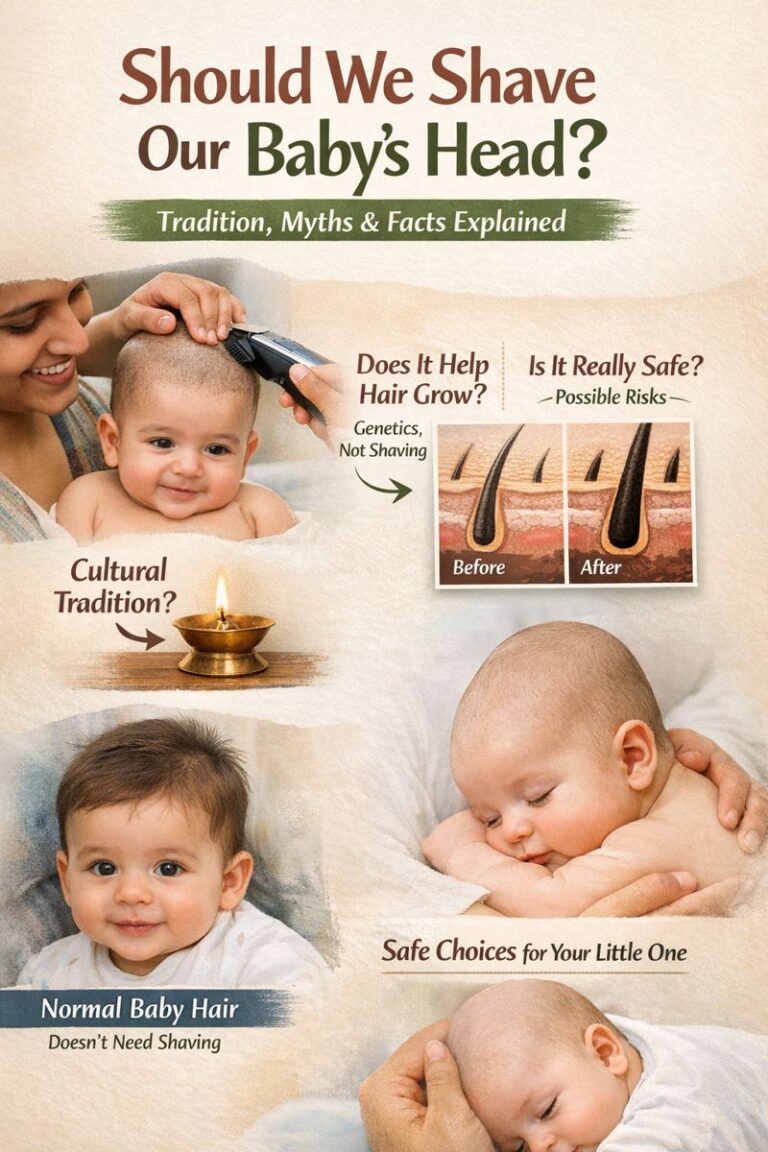
Some beliefs, however, are not supported by scientific evidence. One example is the idea that shaving a baby’s head improves hair growth or physical development.
While such practices may hold cultural or religious significance, they do not directly influence growth or development. Parents can choose what aligns with their values while understanding the biology behind growth.
Daily Care and Its Impact on Development
Everyday routines support more than just physical growth. Everyday habits such as nutrition, rest, and hygiene contribute to long term immune health and support consistent development over time.
Helpful daily practices include:
- Allowing free movement on safe surfaces
- Regular tummy time
- Talking during routine care
- Offering age-appropriate toys
- Responding to cues without rushing
Babies do not need constant stimulation. Overstimulation can be overwhelming. Balance and responsiveness are more beneficial than structured activities.
When to Be Concerned About Baby Growth and Development
While variation is normal, some signs may require professional guidance.
These include:
- Poor weight gain over time
- Loss of previously achieved skills
- Very limited movement
- Minimal social engagement
If concerns arise, consulting a pediatrician provides clarity and reassurance. Early support can be helpful, but most variations resolve naturally.
Parents should trust their instincts. Persistent worry is worth discussing, even if everything turns out to be normal.
Supporting Growth Without Pressure
Growth and development thrive in a low pressure environment. Babies sense stress and tension. When caregivers focus on connection rather than comparison, babies benefit emotionally and physically. Parenting decisions are often influenced by family advice and social expectations. Learning the facts behind common baby care myths allows parents to make confident decisions without pressure or guilt.
Charts and milestones are tools, not measures of parenting success. Your baby’s timeline is their own.
Helpful Growth and Development Resources
Parents often benefit from deeper reading on specific topics such as:
- Rolling over
- Tummy time
- Feeding quantities
- Immunity
- Cultural practices and myths
These focused guides complement this pillar article by addressing individual concerns in detail.
Final Thoughts on Baby Growth and Development
Baby growth and development is not something to rush or perfect. It is a gradual process shaped by biology, environment, and care.
There will be periods of rapid progress and periods that feel slow. Both are normal and healthy. What matters most is providing nourishment, safety, comfort, and emotional security.
You are not doing something wrong if your baby grows or develops differently than others. You are supporting a unique child becoming who they are meant to be.
6 Comments