How to Burp a Baby Properly: Different Positions and Easy Tips
Learning how to burp a baby can seem surprisingly confusing when you are doing it for the first time. You may find yourself wondering whether you are holding your baby correctly, how long you should keep trying, or whether something is wrong when no burp comes out.
Fortunately, burping does not have to be complicated.
Babies can swallow some air while feeding, and helping that air come back up may make them feel more comfortable. But not every baby needs to burp after every feed. Some babies burp easily, while others may barely burp at all.
Instead of trying to force a burp, focus on keeping your baby comfortable, supported, and relaxed.
Why Do Babies Need to Burp?
Babies can swallow air while breastfeeding or bottle feeding. Some of that air can remain in the stomach and make a baby feel uncomfortable.
You might notice your baby becoming fussy, squirming, pulling away from the breast or bottle, arching their back, or bringing their legs toward their tummy. If your baby is frequently fussy during or after feeds, understanding the common reasons newborns fuss and ways to calm them can also help you identify what your baby may be trying to communicate.
A gentle burping session gives swallowed air an opportunity to come back up.
However, there is no need to worry if your baby does not burp every time. If they are calm, feeding normally, and seem comfortable, they may simply not have much air to release.
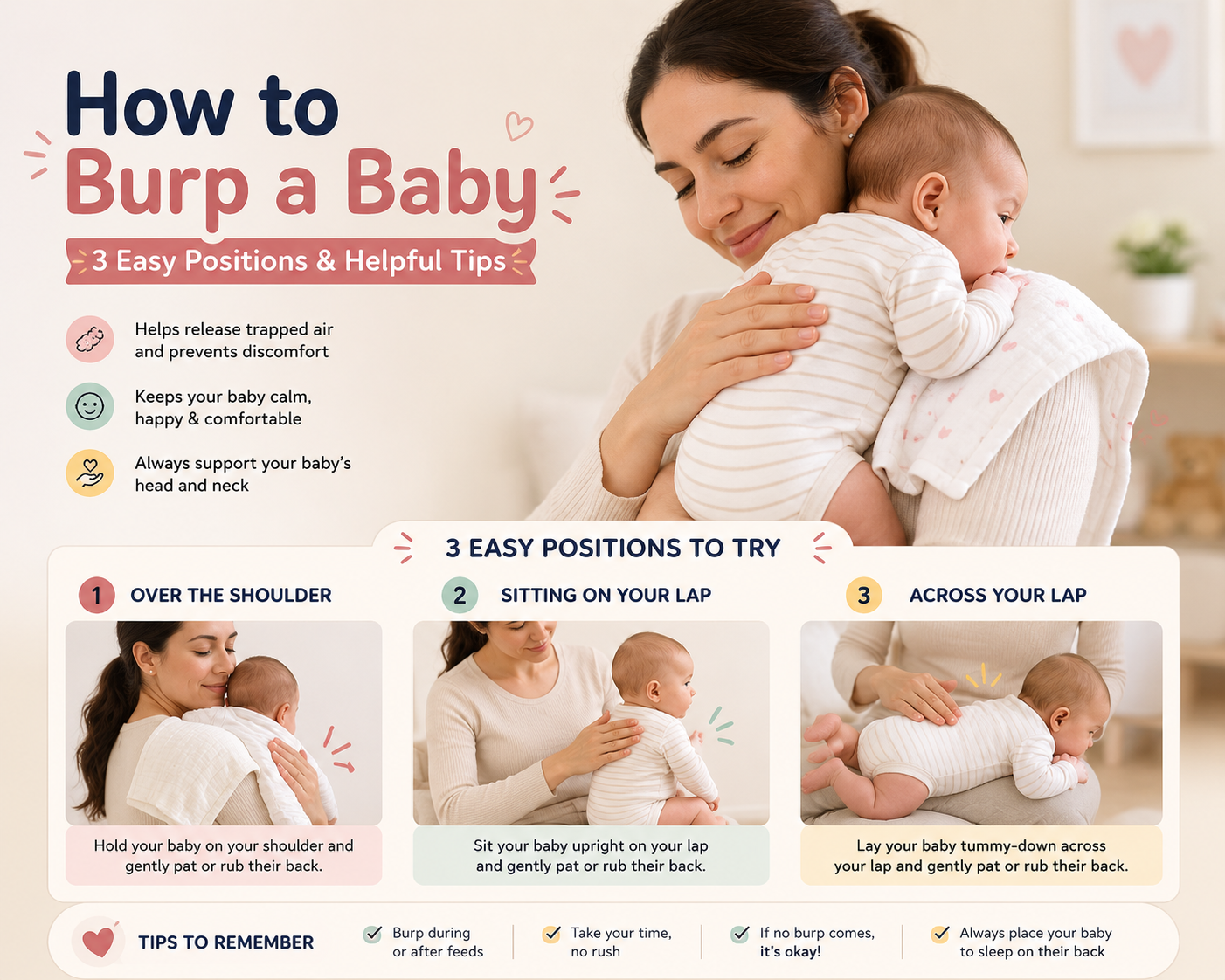
How to Burp a Baby: 3 Easy Positions to Try
There is no single position that works for every baby. If one position does not seem to help, you can calmly try another.
Whatever position you choose, keep your baby’s head and neck well supported.
1. Over the Shoulder
The over-the-shoulder position is often the easiest place to start.
Hold your baby upright against your chest, with their head resting near your shoulder. Keep one hand securely supporting your baby and use your other hand to gently rub or softly pat their back.
Make sure your baby’s face is turned to the side and that their nose and mouth are clear.
A burp cloth over your shoulder is also a good idea because a small amount of milk can sometimes come back up with a burp.
Start with gentle rubbing. If that does not help, try soft, rhythmic pats.
Some babies also settle when you slowly walk around while keeping them upright.
2. Sitting Upright on Your Lap
If your baby does not seem comfortable over your shoulder, try sitting them upright on your lap.
Have your baby face slightly away from you. Support their chest and head with one hand, making sure their neck remains secure.
Allow your baby to lean slightly forward while keeping their airway clear.
With your free hand, gently rub or pat their back.
One advantage of this position is that you can see your baby’s face while you are burping them. This can make it easier to notice whether they are relaxed or becoming uncomfortable.
3. Across Your Lap
Another option is to place your baby across your lap.
Put a clean burp cloth over your legs and gently position your baby across your thighs with their tummy resting against your lap.
Keep their head supported and make sure their nose and mouth are not covered.
Then gently rub or pat their back.
Stay with your baby the entire time. If they become sleepy, move them to a safe sleeping position rather than allowing them to sleep in the burping position.
When Should You Burp a Baby?
You do not have to follow a strict burping schedule.
Some babies seem to benefit from a short burping break during a feed, while others are perfectly happy being burped after feeding.
If you are breastfeeding, you can try burping your baby when you switch sides. You can also pause if your baby becomes unsettled during the feed.
For bottle-fed babies, you may want to take a short break during the feed if your baby appears uncomfortable.
You can also simply wait until the feeding is finished.
The most useful guide is often your baby’s behaviour. If your baby is feeding calmly and seems comfortable, there is usually no reason to interrupt the feed simply because you think they must burp.
How to Burp a Baby After Feeding
Once your baby has finished feeding, hold them upright in a comfortable position.
Start by gently rubbing their back. If that does not produce a burp, try a few soft pats.
Give your baby some time to relax. You do not need to keep changing positions every few seconds.
If your baby burps, you can continue holding them comfortably for a little while before putting them down.
And if no burp comes out?
If your baby is relaxed and comfortable, you can stop trying. Not every baby produces an obvious, loud burp.
Sometimes the burp is very quiet, and sometimes there may simply be no need for one.
What If Your Baby Won’t Burp?
A baby who will not burp can make new parents wonder whether they are doing something wrong. Usually, there is no reason to panic.
Try one or two gentle positions and give your baby a little time. You can change from the shoulder position to sitting upright on your lap, for example.
If your baby remains comfortable, you do not need to keep going.
If your baby seems uncomfortable, you can try another position and gently rub their back.
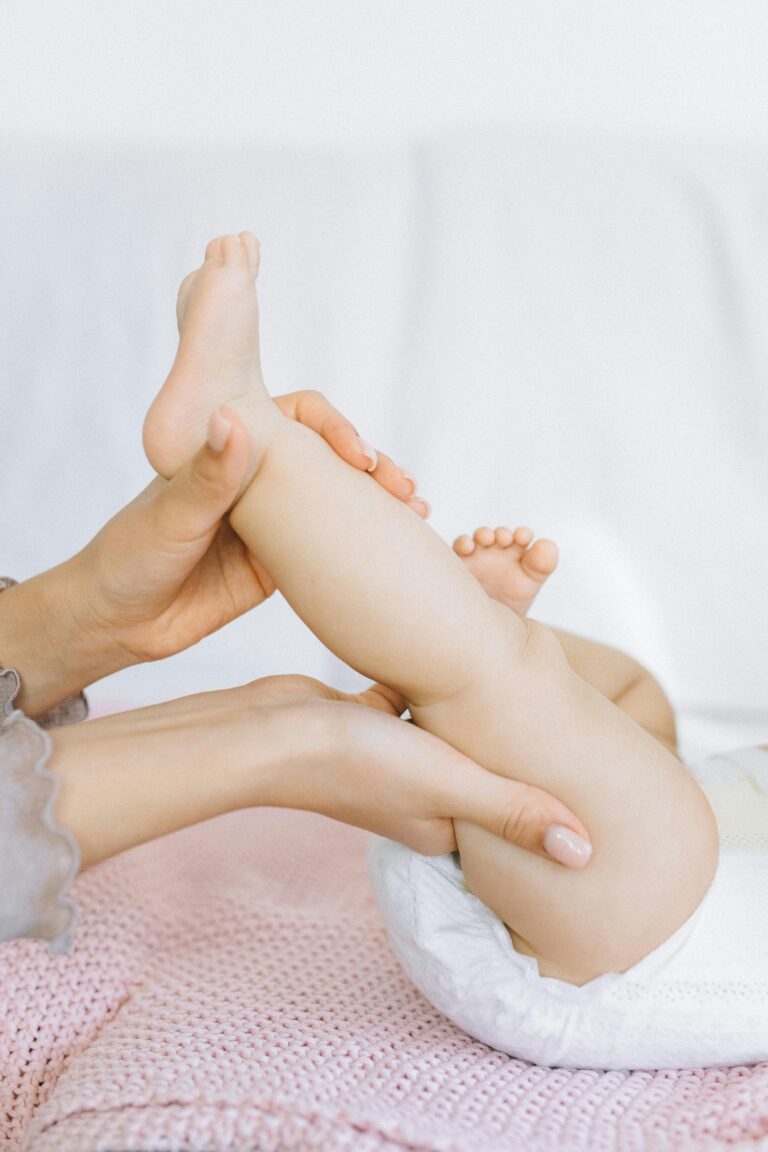
When your baby is awake and safely lying on their back, gentle leg movements can also sometimes help with gas. Slowly moving their legs in a bicycle-like motion may be useful.
What you should not do is increase the force of your patting or keep trying for a long time simply because a burp has not appeared.
Burping should never become a struggle between you and your baby.
How to Burp a Newborn
Knowing how to burp a newborn requires a little extra care because newborns have limited head and neck control.
Keep your baby’s head, neck, and body supported throughout the process. The over-the-shoulder position can be a simple starting point, while the seated position may work well if you prefer to support your baby’s head from the front.
Keep your movements slow and gentle.
If your newborn becomes increasingly upset, take a break. You do not have to continue until you hear a burp.
As you spend more time feeding and caring for your baby, you will begin to notice which positions they prefer and whether they usually need help releasing air.
How to Burp a Sleeping Baby
Many babies fall asleep while feeding, particularly during nighttime feeds. This can leave parents wondering whether they should wake the baby to get a burp out.
Understanding your baby’s overall baby sleep and comfort needs can also make nighttime feeding and settling easier.
If your baby is sleeping peacefully and appears comfortable, there is no need to panic if a burp does not happen.
You can gently hold your baby upright while supporting their head and neck. Instead of patting vigorously, try slowly rubbing their back.
If your baby remains asleep and comfortable, you do not need to keep attempting to burp them indefinitely.
When you are ready to put your baby down, place them on their back on a firm, flat sleep surface.
A burping position is not a safe sleeping position, so do not leave your baby sleeping over your shoulder, across your lap, or sitting upright.
Burping After Breastfeeding vs. Bottle Feeding
Both breastfed and bottle-fed babies can swallow air during a feed.
With breastfeeding, you might try a burping break when changing breasts or whenever your baby becomes unsettled.
With bottle feeding, a short pause during the feed can give your baby an opportunity to burp if they appear uncomfortable.
There is no requirement to use exactly the same routine at every feeding.
Your baby may need to burp during one feed and not need to burp after another.
Over time, paying attention to your baby’s feeding behaviour can help you understand when a burping break is actually useful.
How Long Should You Try to Burp a Baby?
You do not need to spend a long time trying to make your baby burp.
Hold your baby in one comfortable position and gently rub or pat their back for a short while. If nothing happens, you can try another position.
If your baby is calm and comfortable, there is no need to keep going.
The purpose of burping is to help your baby release swallowed air—not to make sure you hear a burp after every feeding.
As you get to know your baby, you will probably discover fairly quickly which position works best for them.
Baby Burping Mistakes to Avoid
When you are learning how to burp a baby, it is easy to assume that more effort will produce better results. It does not.
Patting too hard
Your baby’s back should always be handled gently. Forceful hitting or aggressive patting is unnecessary.
Shaking or making sudden movements
Never shake your baby or use sudden movements in an attempt to release trapped air.
Forgetting head and neck support
Young babies cannot control their heads properly, so keep the head and neck supported throughout the burping process.
Continuing when your baby is comfortable
If you have tried a couple of gentle positions and your baby is relaxed, there is no need to continue simply because you have not heard a burp.
Comparing your baby with another baby
One baby may burp several times during a feed, while another may rarely burp.
That difference does not automatically mean one baby is healthier or that you are doing something wrong.
When Should You Be Concerned?
Gas, occasional fussiness, and small amounts of milk coming back up can happen during infancy.
However, talk to your baby’s healthcare professional if your baby regularly seems to be in significant discomfort during or after feeding, has difficulty feeding, refuses feeds, or is not gaining weight as expected.
You should also seek medical advice if your baby has repeated forceful vomiting, blood in the vomit, breathing difficulties, or appears seriously unwell.
If something about your baby’s feeding or behaviour concerns you, it is always reasonable to discuss it with a pediatrician or other qualified healthcare professional.
Frequently Asked Questions About Burping a Baby
How do you burp a baby easily?
Hold your baby upright against your shoulder and gently rub or pat their back. If that does not work, try sitting them upright on your lap. Different babies respond differently to different positions.
How do you burp a baby quickly?
There is no guaranteed way to make a baby burp quickly. Try holding your baby upright and gently rubbing or patting their back. If they remain comfortable without burping, you can stop trying.
How do you burp a baby naturally?
Hold your baby upright and let them relax while gently rubbing their back. You do not need to use force. Sometimes simply changing your baby’s position is enough to help release swallowed air.
How do you burp a baby after feeding?
Hold your baby upright after feeding and gently rub or pat their back. If your baby does not burp but remains comfortable, there is no need to force one.
How do you burp a baby who won’t burp?
Try another comfortable position and gently rub your baby’s back. If your baby remains calm and comfortable, they may simply not need to burp.
How often should you burp a baby?
There is no single routine that works for every baby. Some babies benefit from a burping break during feeding, while others are comfortable being burped afterward. Pay attention to your baby’s cues rather than following a strict schedule.
Final Thoughts
Learning how to burp a baby can feel awkward at first, especially when you are still getting used to your baby’s feeding routine.
Start with a simple upright position, such as holding your baby over your shoulder, and use gentle rubbing or soft pats on their back. If that does not work, try another position.
Most importantly, do not feel that you have failed if your baby does not burp.
Some babies burp quickly. Others need a little help. And some may not burp after every feed.
The aim is not to produce a perfect burp every time. It is simply to help your baby feel comfortable while keeping them supported and safe.